
The wastewater treatment process plays a critical role in protecting public health, the environment, and water resources. As global urbanization and industrialization continue to rise, efficient wastewater management is more important than ever. Advances in wastewater treatment technologies have led to significant improvements in treatment efficiency, energy use, and sustainability. Here are 5 tips for improving efficiency and sustainability in wastewater treatment:
1. Utilize BIOFLUX MBR Technology for More Efficient Treatment
The BIOFLUX MBR (Membrane Bioreactor) technology combines biological treatment with high-efficiency membrane filtration to provide an innovative solution for wastewater treatment. This system significantly enhances the quality of treated water by improving the removal of pollutants such as suspended solids and organic matter. By using an integrated system that combines biological treatment with membrane filtration, BIOFLUX MBR ensures superior performance and reliability in both municipal and industrial applications.
BIOFLUX MBR technology is particularly valuable in situations where space is limited, as it features a compact design. The combination of biological treatment and membrane filtration reduces the need for large tanks, saving on both space and costs while delivering high-quality effluent.
Advantages of BIOFLUX MBR Technology:
- Compact design: Reduces space requirements compared to traditional systems.
- High-efficiency filtration: Provides superior removal of suspended solids and organic pollutants.
- Energy-efficient: Operates with low energy consumption, making it ideal for cost-effective operations.
- Scalable: Suitable for both municipal and industrial wastewater treatment plants.
2. Adopt BIOGENIC Waste to Energy Technology
The BIOGENIC Waste to Energy technology is an innovative approach that transforms the organic byproducts of wastewater treatment plants into renewable energy. By converting wastewater’s organic waste into biogas, the BIOGENIC system enables treatment plants to generate electricity and heat, helping to reduce their reliance on external energy sources. This energy-efficient system contributes to lowering operational costs while making the treatment process more sustainable.
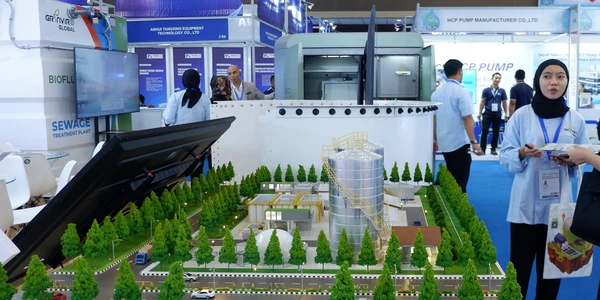
BIOGENIC Waste to Energy technology not only provides a renewable energy solution but also reduces the overall environmental impact of treatment facilities. By using the waste generated during the treatment process as an energy source, BIOGENIC helps to minimize the carbon footprint of wastewater treatment operations.
Advantages of BIOGENIC Waste to Energy Technology:
- Renewable energy generation: Converts organic waste into biogas, which is used to generate electricity and heat.
- Reduced operational costs: Decreases reliance on external energy sources, lowering energy bills.
- Sustainable: Minimizes the environmental footprint of treatment facilities.
- Carbon footprint reduction: Reduces greenhouse gas emissions by utilizing biogas instead of fossil fuels.
3. Implement Zero Liquid Discharge (ZLD) Systems for Water Conservation
The Zero Liquid Discharge (ZLD) system, like FLOWREX, is a state-of-the-art wastewater treatment solution designed to recover almost all the water used in the treatment process. The ZLD technology employs advanced filtration and evaporation techniques to remove contaminants, leaving no liquid waste behind. The result is a system that produces only solid waste, which can either be safely disposed of or further processed for other uses.
This technology is ideal for industries and regions where water conservation is critical. It allows for the complete recycling and reuse of water, making it an invaluable tool for sectors like pharmaceuticals, textiles, and chemicals, where the need for water conservation is high.
Advantages of Zero Liquid Discharge (ZLD) Systems:
- Complete water recovery: Recovers and reuses almost all of the water in the system.
- No liquid waste: Produces only solid waste, reducing disposal costs and environmental impact.
- Highly efficient: Ideal for industries that require stringent water conservation measures.
- Environmentally friendly: Reduces water consumption and helps to preserve natural water resources.
Read: The Best #1 Water Treatment Plant Operation ZLD in Southeast Asia
4. Leverage Data Intelligence and AI with DIAC-X for Optimized Treatment
The Data Intelligence Analyzing Control (DIAC-X) system integrates Artificial Intelligence (AI) and the Internet of Things (IoT) to optimize wastewater treatment processes. By providing real-time monitoring and data analysis, DIAC-X enables operators to make better-informed decisions to enhance treatment efficiency. The system continuously analyzes operational data, detects anomalies, and predicts potential issues before they occur, helping to ensure smoother, more efficient operations.
DIAC-X’s integration of AI and IoT devices also allows for remote monitoring and control, reducing the need for manual intervention and improving system reliability. This technology makes the entire wastewater treatment process more automated, minimizing errors and enhancing both operational performance and energy savings.
Advantages of DIAC-X Technology:
- Real-time monitoring: Provides up-to-date data analysis, improving decision-making and treatment efficiency.
- Predictive analytics: Detects anomalies and predicts potential issues before they arise.
- Remote control: Enables remote monitoring and reduces the need for manual intervention.
- Optimized efficiency: Integrates AI and IoT to improve the overall operational performance of wastewater treatment.
5. Focus on Energy and Resource Recovery Systems
Modern wastewater treatment plants can improve sustainability by adopting energy recovery systems. Processes like anaerobic digestion produce biogas, which can be captured and used for electricity generation, reducing energy consumption and making treatment plants more self-sufficient. Many plants are now incorporating these systems to lower energy costs and become less reliant on external power sources.
Additionally, resource recovery technologies enable the extraction of valuable nutrients, metals, and other resources from wastewater. For example, phosphorus recovery systems allow for the extraction and reuse of phosphorus in fertilizers, supporting a circular economy by minimizing waste and reducing environmental impact.
Advantages of Energy and Resource Recovery Systems:
- Energy self-sufficiency: Captures biogas to generate electricity, reducing reliance on external energy.
- Cost savings: Lowers operational costs by recovering energy from the treatment process.
- Circular economy support: Enables the recovery of valuable resources like phosphorus for reuse.
- Sustainable operation: Reduces environmental impact by minimizing waste and promoting resource recovery.
Sustainable and Energy-Efficient Wastewater Treatment
A key focus of modern wastewater treatment processes is improving sustainability. Innovations in energy-efficient technologies are enabling wastewater treatment plants to reduce their environmental impact.
1. Energy Recovery Systems
Wastewater treatment processes, such as anaerobic digestion, produce biogas as a byproduct. This biogas can be captured and used to generate electricity, reducing the need for external energy sources. Many treatment plants are now implementing energy recovery systems to become more self-sufficient and reduce operating costs.
2. Resource Recovery
Beyond water, water contains valuable resources, such as nutrients, metals, and energy. Technologies that recover these resources are gaining traction. For example, phosphorus recovery systems allow for the extraction and reuse of this essential nutrient in fertilizers, promoting a circular economy.
3. Decentralized Wastewater Treatment
Decentralized systems, including constructed wetlands and small-scale membrane filtration units, are becoming popular in rural and remote areas. These systems are more energy-efficient and cost-effective than large centralized treatment plants, making them ideal for off-grid locations or small communities.
The Role of Artificial Intelligence (AI) and IoT in Wastewater Treatment
The integration of Artificial Intelligence (AI) and Internet of Things (IoT) technologies is transforming the wastewater treatment process. These technologies enable real-time monitoring, predictive maintenance, and process optimization, leading to more efficient and cost-effective operations.
- AI-powered Systems: AI algorithms can predict system failures, optimize chemical dosing, and improve energy management, leading to more efficient operation and reduced operational costs.
- IoT Sensors: IoT sensors allow for continuous monitoring of water quality and system performance, providing operators with real-time data to make informed decisions and improve treatment outcomes.
Conclusion
By implementing these five advanced technologies, wastewater treatment facilities can improve their efficiency, sustainability, and environmental impact. Adopting innovative solutions like BIOFLUX MBR, BIOGENIC Waste to Energy, FLOWREX ZLD, DIAC-X, and energy/resource recovery systems will not only reduce operational costs but also contribute to a more sustainable future for water treatment and resource management.

Visit Us:
- 7th floor,1#Building ,No.200 Sanmen Road ,Yangpu District ,Shanghai ,China
- The Prominence Office Tower Lt. 28, Jl. Jalur Sutera Barat, Tangerang
- Jl Utama Modern Industri Blok AA No.5, Kawasan Modern Industri Cikande
- Ciputra World Office Surabaya Lt. 29, Jl. Mayjen Sungkono, Surabaya
- Pattene Business Park Blok W3a Makassar