

Poor water quality can have a significant impact on public health and ecosystems. Therefore, regular water quality monitoring is crucial. One of the most effective ways to monitor water quality is through Internet of Things (IoT) technology, such as the use of IoT Water pH Sensors and pH Analyzers.
In this article, we will discuss how this technology works to monitor water quality, and how Grinviro’s DIAC-X technology can be used for wastewater monitoring based on IoT and Artificial Intelligence (AI). This technology paves the way for more efficient and accurate monitoring solutions in maintaining water resource sustainability.
What is a Water pH Sensor and pH Analyzer?
A Water pH Sensor is a tool used to measure the acidity or alkalinity of water (pH) in real-time. This device is connected to an IoT network, enabling the pH data to be automatically sent to servers or other devices for further analysis. This technology allows for more efficient water quality monitoring without the need for continuous manual measurements.
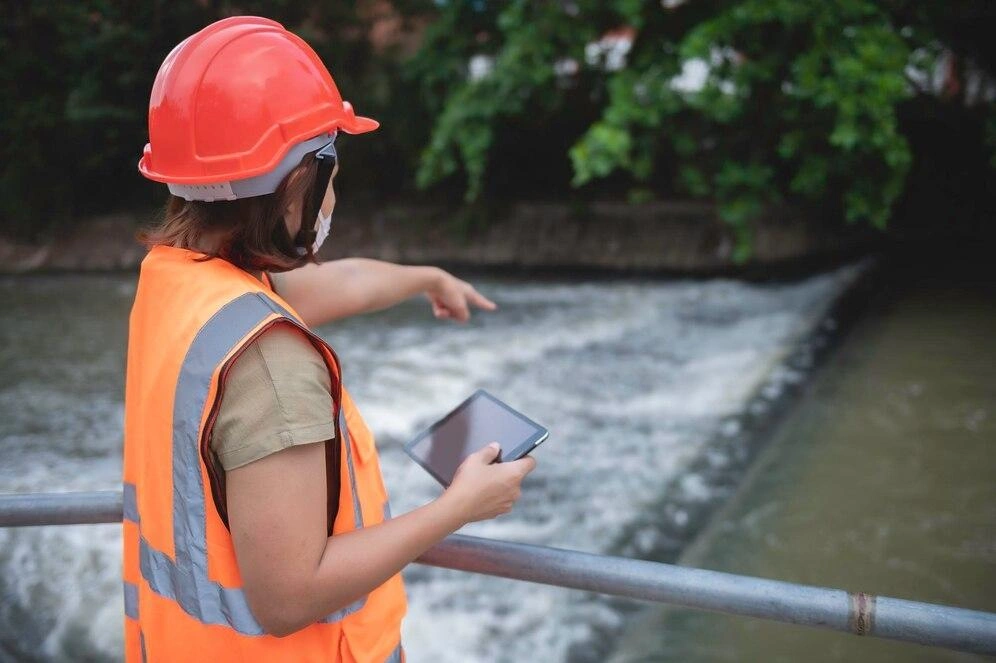
On the other hand, a pH Analyzer is used to measure and analyze the pH levels of water, whether it’s clean water, wastewater, or water from natural sources. When the pH level of water changes, it may indicate pollution or hazardous chemical changes. The use of pH Analyzers in an IoT system provides accurate data, which can then be used to take appropriate actions to maintain water quality.
Why is Monitoring Water pH Important?
Water pH levels are one of the key indicators of water quality. pH is a measure of water’s acidity or alkalinity, which can affect many aspects, such as:
- Human Health: Water with a pH that is too low (acidic) or too high (alkaline) may contain harmful chemicals that can be hazardous to human health. For example, very low pH can lead to heavy metal poisoning, while high pH may damage the skin or digestive system.
- Ecosystem Health: Flora and fauna living in water are very sensitive to pH changes. Water that does not meet pH standards can disrupt aquatic life, causing fish deaths or affecting aquatic plants’ growth.
- Pollution Indicators: Sudden changes in pH often indicate pollution, such as industrial waste or chemicals being discharged into rivers or lakes.
Therefore, continuous pH monitoring is essential to maintaining both ecosystems and human health.
Read: Inovasi Monitoring IPAL 2025: Mengapa Limbah Cair Perlu Dimonitor dan Bagaimana Cara Kerjanya?
DIAC-X: IoT and AI-Based Wastewater Monitoring Technology from Grinviro
In addition to using pH Sensors, water quality monitoring technology has become more advanced with the introduction of AI and IoT-based solutions, one of which is DIAC-X from Grinviro. DIAC-X is an advanced system that combines IoT technology with Artificial Intelligence (AI) to monitor and analyze water quality, especially in wastewater.

DIAC-X has the ability to automatically and real-time monitor water quality using various sensors, including pH sensors, as well as sensors to detect other parameters such as temperature, turbidity, dissolved oxygen (DO), and more. This system can be applied in various industries, ranging from wastewater treatment, chemical industries, to companies focused on natural resource management.
Key Features of DIAC-X:
IoT-Based Monitoring
DIAC-X integrates IoT technology with sensors that can monitor various water quality parameters in real-time, such as pH, temperature, DO, turbidity, and more. These sensors can be installed at various wastewater treatment locations to obtain accurate and comprehensive data.
AI Integration
One of the main advantages of DIAC-X is the use of Artificial Intelligence (AI) to analyze the data collected by the sensors automatically. With AI, the system can not only monitor water quality but also perform predictive analysis. For example, AI can predict trends in water quality changes based on historical data and provide recommendations for preventive actions.
Early Warning and Preventive Actions
When wastewater quality is detected to exceed predetermined limits, DIAC-X can provide early warnings to take immediate action. This technology allows managers to take corrective measures more quickly, reducing larger environmental impacts, and ensuring that water discharged into the environment is safe.
Cloud-Based Platform
All data collected by DIAC-X sensors can be stored and analyzed on a cloud platform. This allows managers to monitor water quality from any location, providing easy access and enhancing transparency in wastewater management.
How Do Water pH Sensor & pH Analyzer DIAC-X Work?
The IoT Water pH Sensor works on the principle of electrochemistry. The sensor is equipped with electrodes sensitive to changes in water pH. When the water’s acidity level changes, these electrodes generate an electrical signal proportional to the pH change. This signal is then transmitted via the IoT network to a larger monitoring system, such as a cloud-based platform. As a result, pH data can be received and processed in real-time.
The main function of the IoT Water pH Sensor is to provide continuous and accurate monitoring of water quality. This is useful in various applications, such as:
- Real-Time Monitoring: The sensor allows water quality data to be obtained in real time, enabling managers to quickly detect changes
- Cost and Time Efficiency: Using this technology reduces the need for time-consuming and costly manual testing, ensuring data collection is more efficient.
- Early Warning: If there is a significant change in the water pH, the sensor can provide notifications or alerts to prompt corrective actions.
- Remote Monitoring: With IoT connectivity, managers can monitor water quality from anywhere, making the system more flexible and accessible.
In the future, the use of IoT and AI technology in water pH analyzers is expected to expand further. This technology not only helps optimize wastewater management but also provides sustainable solutions for overall water conservation. With increasingly advanced technology, we can manage water resources more efficiently and ensure their sustainability for future generations.
With the presence of DIAC-X and other IoT and AI-based solutions, water quality monitoring becomes more accurate, faster, and efficient. This opens up opportunities for ensuring better water quality in the future, both for industrial needs and broader environmental protection.
Conclusion
Water quality monitoring, especially through the use of IoT Water pH Sensors and pH Analyzers, is becoming increasingly important to maintain water quality that is safe for both humans and the environment. With the DIAC-X technology from Grinviro, IoT and AI-based wastewater quality monitoring systems are becoming more advanced, providing faster and more precise solutions to maintain water quality standards. The integration of this technology takes wastewater quality management to the next level, reducing environmental impacts, and improving health and safety for all involved parties.
Contact Grinviro’s team for further consultation on IoT & AI-based water pH sensor and pH analyzer monitoring systems.

WhatsApp: +62823-4811-4479
Visit Us:
- The Prominence Office Tower, Jl. Jalur Sutera Barat, Tangerang
- Jl Utama Modern Industri Blok AA No.5, Kawasan Modern Industri Cikande
- Ciputra World Office Surabaya Lt. 29, Jl. Mayjen Sungkono, Surabaya
- Pattene Business Park Blok W3a Makassar